
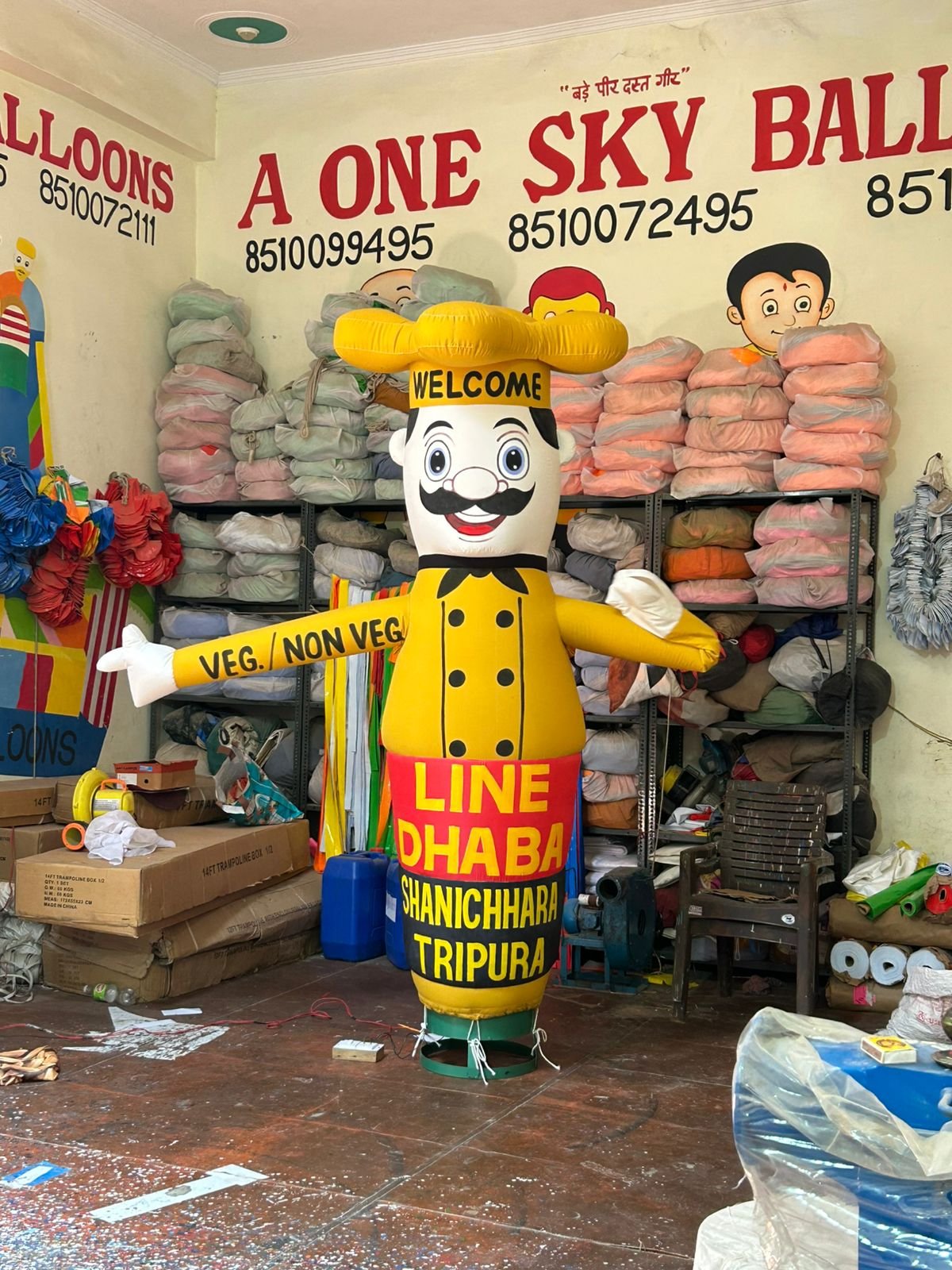
Dynamic dancing inflatables, commonly referred to as air dancers, sky dancers, or fly guys, serve as energetic roadside roadside attention-getters for automotive dealerships, retail plazas, service centers, and festival fairgrounds. Achieving energetic, fluid wave motions depends heavily on the harmonious match between blower motor output and lightweight fabric aerodynamics.
1. How Continuous Airflow Generates Dynamic Dance Motion
An air dancer operates on basic fluid dynamics. A high-velocity vortex blower forces pressurized air upwards through the tubular fabric body. As airflow reaches the open top and arm vents, air pressure equalizes, causing the column to momentarily buckle and drop. The sudden restriction builds immediate backpressure, propelling the dancer upright once again in an unpredictable dancing rhythm.
2. Motor Blower Horsepower and Speed Ratings
The diameter and height of the tube dictate the necessary motor capacity. Standard single-leg 10 to 15-foot dancers pair effectively with 0.5 HP to 1.0 HP directional vortex blowers spinning at 2800 RPM. Oversized 20-foot dual-leg dancers and wide-body promotional characters demand 1.5 HP to 2.0 HP commercial blowers equipped with directional louvers to distribute air equally across both legs.
3. Fabric Selection: Parachute Ripstop Nylon vs Polyester
Material weight directly influences dynamic dance characteristics. Dense heavy fabrics will not lift smoothly and cause premature motor strain, while excessively fragile textiles fray rapidly under constant friction. Premium air dancers utilize high-tenacity ripstop nylon coated with silicone or polyurethane treatments. The ripstop grid pattern stops micro-tears from spreading, ensuring resilient longevity even in continuous outdoor operation.
4. Weather Safety, Moisture, and Electrical Protection
Because blower units operate outdoors, electrical components must be safeguarded. Always connect blowers to grounded weather-protected outdoor receptacles equipped with residual current circuit breakers (RCCB/GFCI). Never operate fabric tube dancers during heavy rainfall, as wet fabric absorbs moisture, becomes heavy, and collapses over the blower air intake, overheating the motor.
5. Maintenance and Storage Protocols
Keep the blower base free of fallen leaves, gravel, and loose debris that can damage the rotating impeller blades. Inspect the velcro attachment collar regularly to ensure tight airflow sealing. When storing, fold the nylon body cleanly and keep it in a ventilated dry storage bag away from damp environments and rodent access.